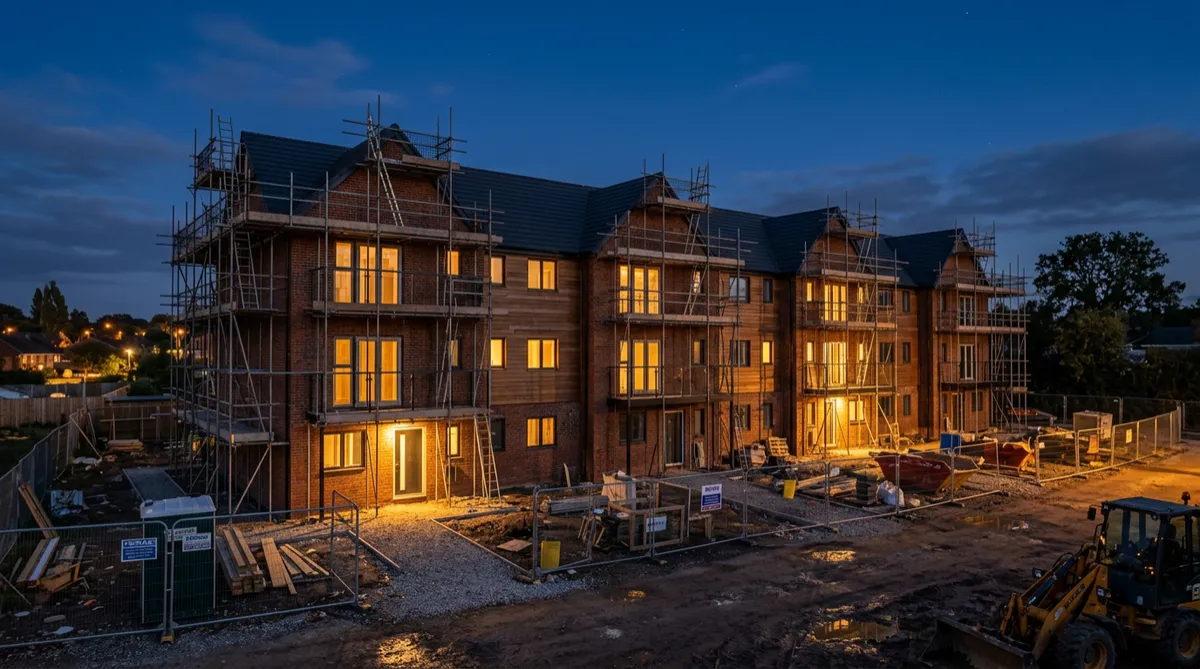
Bridging Loans for Property Developers: UK Guide 2026
For a UK property developer, timing is often the difference between securing a site and losing it. Planning decisions, auction deadlines and senior lender credit committees all run on different clocks. A bridging loan is the short-term, property-secured finance many developers use to close that gap. This guide explains how bridging works for developers, what it typically costs in late 2026, how it differs from development finance, and what lenders want to see before they say yes.
If you are new to the product, start with our pillar guide, How Bridging Loans Work: Quick Property Finance, then come back here for the developer-specific detail.
Why developers use bridging finance
Bridging is short-term lending, usually from a few months up to 18 or 24 months, secured on property. Lenders focus mainly on the value of the security and the credibility of the exit rather than on your salary or rental income. For developers, that flexibility tends to matter in four situations:
- Site acquisition: buying land or a building quickly, including at auction, before senior development finance is in place.
- Pre-planning purchases: acquiring a site where the exit is a planning consent followed by a sale or refinance.
- Light refurbishment: funding works that make an unmortgageable property suitable for a term loan or a sale.
- Development exit: repaying a development facility at practical completion so units can be sold at sensible prices rather than under pressure.

Most developer bridges are unregulated because the property is bought to sell or let rather than to live in. Regulated rules generally apply where you or close family will live in the property. Our guide to regulated vs unregulated bridging loans explains the line in more detail.
What the latest market data says
Three headline indicators matter to developers right now: the Bank of England base rate, lender pricing, and lending volumes. All figures below are from the named sources and are indicative of the wider market, not an offer for any individual case.
Bank of England Bank Rate
According to the Bank of England, the Monetary Policy Committee raised Bank Rate by 0.25 percentage points to 4% on 5 November 2026, citing higher energy prices. The Bank said inflation had risen to 3.5% and that it expects it to climb towards about 5% by mid-2027. It also stressed the increase should not be read as the first of an inevitable sequence of hikes. The next scheduled decision is on 17 December 2026.
Bridging lenders price off their own cost of funds and appetite for risk, so bridging rates do not move one-for-one with Bank Rate. But sustained higher funding costs can filter through to pricing over time, which is why modelling a buffer into your appraisal is sensible.
Bridging Trends (MT Finance), Q3 2026
As reported by Landlord Today, the Q3 2026 Bridging Trends report from MT Finance shows:
- Contributors lent £181.8 million in Q3, up 5% from £173.1 million in Q2 but 13.2% below Q3 2025.
- The average monthly interest rate fell to 0.77% from 0.81%, a fourth consecutive quarterly fall.
- Average completion time fell to 41 days from 46.
- Average loan-to-value rose to 59% from 55%, and the average term stayed at 12 months.
- Unregulated loans made up 55% of lending, and first-charge loans rose to 87%.
The same report noted that development bridging saw the biggest uplift among broker search terms on the Knowledge Bank platform during the quarter, a sign of continued demand from developers.
BDLA lending statistics, Q3 2026
Reported by The Intermediary, the Bridging & Development Lenders Association (BDLA) said member completions reached £2 billion in Q3 2026, up 27.7% on the previous quarter, with total reported loan books at £11.96 billion. Development lending totalled £328.1 million, up from £273.5 million in Q2, and average LTV rose to 59.12%.
The BDLA cautions that its membership grew by 28% in ten months, which inflates quarter-on-quarter comparisons. Against Q3 2025, reported completions were 21.2% lower and applications 35.2% lower. In other words, the market is active but not booming, which is why lenders are paying close attention to exit evidence.
What does development bridging cost?
Bridging interest is quoted per month, not per year. Current published guidance suggests:
- Fox Davidson reports bridging rates across the UK market in November 2026 running from roughly 0.57% to 1.5% a month, with most mainstream deals between 0.65% and 0.95%. Headline "from" rates apply only to the strongest cases.
- Construction Capital's September 2026 guidance puts development bridging at around 0.55% to 1.2% a month, with pre-planning purchases often at the upper end, around 0.95% to 1.25% a month at 60–65% LTV.
A useful rule of thumb: 0.75% a month is roughly 9% a year. Always convert monthly figures to a total cost in pounds before comparing options.
Worked example (illustrative only)
| Item | Illustration |
|---|---|
| Loan amount | £500,000 |
| Indicative rate | 0.85% per month, interest rolled up |
| Term | 9 months |
| Rolled-up interest (compounded) | approx. £39,600 |
| Arrangement fee at 1.5% | £7,500 |
| Subtotal before valuation and legal fees | approx. £47,100 |
That sits within the £46,000–£49,000 range Construction Capital cites for a similar scenario. Valuation and legal fees are typically paid separately and can add roughly £1,500 to £5,000 on a straightforward bridge, according to the same source. Exit fees, broker fees and minimum interest periods may also apply, so ask every lender for a full illustration.
Developers usually choose rolled-up interest (added to the balance and repaid on exit) or retained interest (deducted from the advance) to protect cash flow. Both reduce flexibility, and rolled-up interest compounds, so a loan that overruns costs more than the headline rate suggests. Our bridging loan cost guide covers every fee in detail.
Bridging vs development finance
The two products solve different problems. Bridging typically funds in a single tranche after legal completion, which Construction Capital says commonly takes two to six weeks from application. Development finance releases funds in stages against certified build progress, usually with a monitoring surveyor. Fox Davidson reports development finance pricing of around 0.65% to 1.10% a month (roughly 8% to 13% a year), with interest charged on drawn funds only.
Many developers combine them: a bridge to acquire the site and secure planning, then refinance into a development facility for the build. Others use a bridge again at the end as a development exit loan. Running both conversations in parallel can avoid a gap between the two.
What lenders look for
Whatever the scheme, bridging lenders ask three core questions: is the security adequate, is the exit credible, and can the borrower deliver? The BDLA's chief executive has said that, with sale timescales stretching, lenders are testing how long a sale could realistically take and what alternatives exist if it overruns. Before approaching a lender, prepare:
- A realistic exit with evidence, such as an agent's opinion of value, comparable sales or a mortgage agreement in principle. See our guide to bridging loan exit strategies.
- A track record or an experienced team, plus a costed schedule of works.
- Planning status, title information and any other consents.
- A term with contingency, ideally two to three months beyond your programme, given how unpredictable sales and planning timelines can be.
Practical tips before you apply
- Judge the total cost, not the headline rate. Stress-test your appraisal against a longer term and a higher rate.
- Plan the exit first. A strong property with a weak exit rarely gets funded on good terms.
- Compare structures. Ask for serviced, rolled-up and retained illustrations side by side.
- Check regulation. Confirm whether any part of the property will be occupied by you or family.
- Take independent advice. A specialist adviser can present the case to lenders whose criteria suit your scheme.
Is bridging right for your development?
Bridging is a precision tool. Used well, it lets developers move at the speed of the market, buy sites others cannot and keep schemes on programme. Used without a clear exit, it can become expensive quickly. With Bank Rate at 4%, average bridging rates edging down and lending volumes steady, the conditions remain workable for well-prepared projects, but they are changing, so treat every figure here as a starting point for a conversation rather than a quote.
Important information: Your property may be repossessed if you do not keep up repayments. Rates and figures quoted are indicative only and subject to change. Best Rate Mortgages is a trading name. Always seek independent financial advice.
Sources: Bank of England (Bank Rate decision, 5 November 2026); MT Finance Bridging Trends Q3 2026 as reported by Landlord Today; Bridging & Development Lenders Association Q3 2026 data as reported by The Intermediary, with Q2 commentary as reported by Mortgage Strategy; Fox Davidson (November 2026); Construction Capital (September 2026). Figures were checked on 23 November 2026.